

How Fitpage Unified Two Brands with Secure Domain Authentication and Centralized Email Infrastructure
Client Overview
Founded in 2020, Fitpage was built with a clear mission: to improve cardiovascular health through science-backed coaching, structured training plans, and expert-led education. As the platform expanded into corporate wellness programs and content-driven verticals, growth accelerated. Strategic acquisition became the next logical step.
However, the acquired brand arrived with its own mailing domain, its own authenticated email domain, its own SPF, DKIM, and DMARC configuration, and its own email service provider. While many companies choose to dissolve acquired communication systems, Fitpage made a deliberate strategic decision to retain the acquired brand identity and continue its mailing activities without disruption. At the same time, they wanted to centralize campaign management under one unified ecosystem aligned with their long-term vision.
This is where the real complexity began.
The Core Problem: Multi-Domain Email Operations After Acquisition
Email marketers often underestimate the complexity of post-acquisition email infrastructure. In Fitpage’s case, the challenge went beyond simple campaign migration. They needed to manage multi-domain email operations while preserving brand identity and protecting sender reputation.
They required proper domain authentication for each sender domain, safe email service provider migration, protection of existing domain reputation, avoidance of DNS misconfiguration, centralized campaign execution, and a scalable infrastructure capable of supporting future growth.
Improper email domain authentication during migration can result in SPF record misalignment, DKIM signature failures, DMARC policy conflicts, declining inbox placement, increased spam filtering, and long-term reputation damage. Many businesses switching email marketing platforms encounter exactly these issues.
Fitpage understood that changing email platforms was not just a vendor decision. It was a technical migration requiring structured sender domain authentication and disciplined DNS management.
Vendor Comparison and Strategic Decision
Before consolidating operations, Fitpage conducted a comprehensive vendor comparison between the existing ESP used by the acquired brand and cmercury. The evaluation focused heavily on domain authentication flexibility, multi-domain authentication support, deliverability infrastructure, sender reputation management, email authentication best practices, centralized control capabilities, and long-term scalability.
After a detailed technical and operational vis-à-vis assessment, Fitpage decided to standardize entirely on cmercury. The objective was not merely to switch tools. It was to build a unified email ecosystem while maintaining secure authenticated email domains across both brands.
The Solution: Secure Multi-Domain Authentication and Infrastructure Consolidation
The first priority was structured domain authentication across both brands. Each sender domain was independently configured with proper SPF record alignment, DKIM email signing, DMARC policy enforcement, DNS record validation, and domain verification. This ensured secure sender domain authentication within a single centralized account.
Rather than merging domains or risking cross-domain contamination, cmercury enabled secure multi-domain authentication inside one ecosystem. Each brand retained domain independence while benefiting from shared infrastructure, eliminating authentication conflicts and protecting sender reputation.
The second priority was reputation-safe email service provider migration. Switching ESPs often disrupts sender reputation if not handled carefully. To prevent this, cmercury implemented a structured domain warm-up strategy combined with engagement-based sending. Gradual throughput pacing, domain reputation monitoring, and inbox placement optimization ensured stability during the transition.
By combining secure domain authentication with engagement-driven sending practices, deliverability remained consistent throughout the migration process. Open rates, sender trust, and campaign performance were preserved.
The third priority was centralized multi-domain campaign management. With proper domain authentication established, Fitpage could now manage both brands from a single operational dashboard. The team could select authenticated sender domains per campaign, monitor domain-level performance metrics, maintain brand separation, and execute campaigns without switching between tools or accounts.
This consolidation significantly reduced operational friction while aligning email strategy with long-term growth plans.
The Results
Fitpage successfully unified two independent email ecosystems into one centralized infrastructure. Both domains now operate under structured domain authentication, aligned SPF, DKIM, and DMARC configuration, and continuous reputation monitoring.
Sender reputation remains strong across both brands, supported by engagement-based sending and proper email authentication best practices. Inbox placement remains stable, and campaign execution is faster and more organized.
Most importantly, Fitpage now has a scalable email infrastructure. Future domains or sub-brands can be authenticated and integrated seamlessly without restructuring workflows or adopting additional platforms.
Why This Matters for Email Marketers
Many email marketers face similar challenges when managing multiple sender domains, merging brands post-acquisition, switching email service providers, or consolidating email marketing systems. Without proper domain authentication and structured migration planning, these scenarios frequently lead to deliverability decline, spam filtering increases, reputation damage, and operational inefficiency.
Fitpage’s experience highlights a critical truth: domain authentication is not a technical checkbox. It is foundational email infrastructure.
SPF, DKIM, and DMARC configuration must be treated as strategic assets. Multi-domain authentication must be handled with precision. ESP migration must prioritize sender reputation and inbox placement. Only then can brands scale communication without compromising trust.
Conclusion: Domain Authentication as the
Backbone of Scalable Email Operations
For growth-focused brands expanding through acquisition or managing multiple sender domains, secure domain authentication is essential. Fitpage successfully consolidated two brands, unified email operations, preserved sender reputation, implemented secure multi-domain authentication, and built a scalable email infrastructure designed for long-term growth.
Today, Fitpage continues advancing heart fitness across India while operating a secure, centralized, and performance-optimized email ecosystem behind the scenes. For email marketers navigating similar challenges, the lesson is clear: proper domain authentication is the backbone of deliverability, trust, and scalable communication success.
More Customer Success Stories
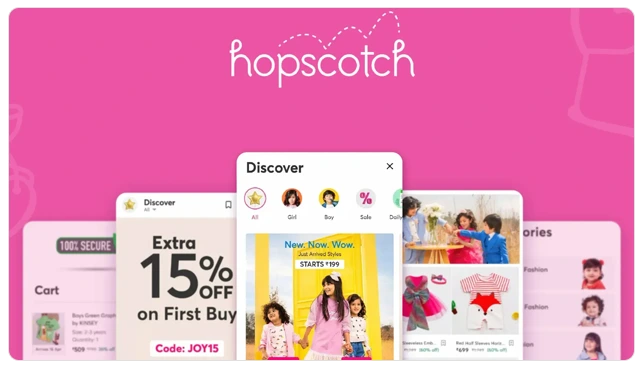
How cmercury Helped Hopscotch Achieve Industry-Best Email Performance
Hopscotch is India’s largest online kids’ fashion brand, dedicated to transforming every moment in a child’s life into a stylish #HopscotchMoment.

Transforming Clovia’s Email Marketing with Adaptive Flow
Clovia, one of Asia’s largest online sellers of women’s innerwear, offers a diverse range of lingerie, sleepwear, activewear, and personal care products.

Enhancing Cohoma’s Email Marketing with Automated Workflows
Cohoma Coffee, founded by Kanika & Paritosh Birla, is driven by a passion for making high-quality coffee easily accessible.

Ecommerce Email Marketing Case Study of Zivame
Zivame.com is a leading online lingerie brand in India that was launched in 2011. It offers a variety of styles and brands with a valuation of $100 million.

Secure, Scalable Email Infrastructure for Growing Brands
Manage multiple domains, protect sender reputation, and scale campaigns confidently, just like Fitpage did with cmercury.